




From Data to Decisions: How AIoT Is Transforming Connected Systems
- Technology
-

By admin
- Sep 14, 2026
- 8 Views
IoT has changed the way devices collect and exchange information. Sensors, machines, cameras, and other connected devices can continuously generate data from the environments around them. But as IoT systems become more connected, another challenge emerges: how can businesses turn all that data into meaningful information?
This is where Artificial Intelligence of Things (AIoT) comes in. By combining Artificial Intelligence (AI) with Internet of Things (IoT), AIoT enables connected systems to do more than collect data. It can help analyze information, identify patterns, and support faster, more informed decisions.
What Is AIoT and How Is It Different from IoT?
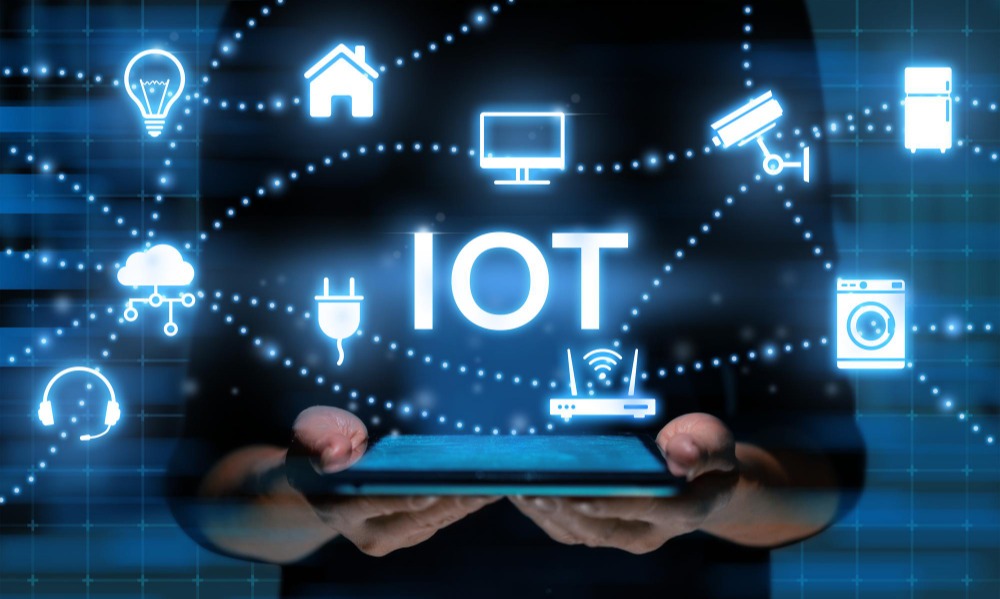
The Internet of Things (IoT) connects physical devices so they can collect and exchange data. For example, sensors can monitor temperature, equipment conditions, energy usage, or activity across a facility. AIoT takes this concept further by adding AI capabilities to the IoT environment. Instead of simply collecting and displaying data, an AIoT system can help interpret that information and identify patterns that may require attention.
In simple terms:
IoT collects the data. AI helps understand it. AIoT connects both to support better decisions.
This shift makes connected systems more intelligent and responsive, particularly when organizations need to manage large amounts of real-time information.
Why Is AIoT Becoming Important?
The growth of connected devices means organizations are generating more data than ever. The challenge is no longer simply collecting information, but determining which information actually matters.
AIoT can help organizations process data from connected devices and turn it into useful insights. Depending on the application, AI can support tasks such as anomaly detection, predictive analysis, pattern recognition, and intelligent monitoring.
This can help businesses:
- Improve visibility across connected environments.
- Identify unusual conditions more efficiently.
- Reduce repetitive monitoring tasks.
- Make better use of real-time IoT data.
- Support faster and more informed decisions.
The goal is not to replace people. Instead, AIoT can help teams focus their attention on information that matters most.
Where Can AIoT Be Used?
The combination of AI and IoT can be applied across many industries and connected environments.
- In smart buildings, AIoT can connect sensors and building systems to monitor environmental conditions, energy usage, and security.
- In industrial IoT (IIoT), connected equipment can continuously provide operational data, while AI can help identify unusual patterns and support predictive maintenance.
AIoT can also support security systems, environmental monitoring, transportation, healthcare, and connected infrastructure. IEEE's current AIoT research areas include applications ranging from smart cities and manufacturing to transportation, environmental monitoring, and intelligent infrastructure.
The technology may vary between industries, but the fundamental idea remains the same: connect devices, understand data, and support better action.
From IoT Data to Intelligent Decisions
One of the biggest opportunities of AIoT is the ability to shorten the gap between an event and the decision that follows.
A conventional IoT monitoring system may show information on a dashboard and leave teams to determine what requires attention. An AI-powered IoT system can help analyze incoming information and highlight patterns or conditions that may be important.
This creates a simple flow:
Connected Devices → Data → AI Analysis → Insights → Decisions
In some AIoT architectures, intelligence can also move closer to the devices through edge AI, allowing data to be processed nearer to where it is generated. This can help reduce latency and support more responsive connected systems.
The Future of AIoT and Connected Systems
AIoT represents an important evolution of connected technology. IoT provides the connectivity and data, while AI adds intelligence that can help organizations understand and act on that information.
As connected devices continue to grow, the value of AIoT will not simply come from having more sensors or generating more data. It will come from the ability to transform that data into useful insights, faster responses, and better decisions.
The future of connected systems is therefore not only about connecting more devices. It is about creating stronger connections between data, intelligence, people, and action.
Building Smarter Connected Systems
At SOLU, we develop technology solutions that connect devices, data, and systems to help organizations gain better visibility, respond to changing conditions, and make better decisions.
From data to decisions. From connected devices to intelligent systems.
Share:
Request A Call Back
Your next big leap starts with a simple conversation, let's sparks the next big idea together
